Joshua Robinson and Jonathan Clegg’s The Formula accomplishes something rare in non-fiction sports publishing: renders much of the existing Formula 1 literature redundant. Not through groundbreaking original reporting, but through a disciplined approach to its synthesis and narrative clarity. For a sport whose history has been scattered across biographies, circuit retrospectives, and pseudo-technical primers, this book offers what the F1 publishing market has long lacked, a coherent entry point that doesn’t sacrifice depth for accessibility.
What the Book Delivers
The Formula traces how a sport once sustained by broken budgets became a $4.4 billion global enterprise. The through-line is power: who wielded it, who lost it, and how television rights transformed everything. Bernie Ecclestone dominates the early narrative. Robinson and Clegg chart his evolution from team owner to dealmaker, showing how he wrested TV rights from the governing body, corralled teams into FOCA, and outmaneuvered everyone to build an empire. By the time Liberty Media acquired the sport in 2017, Ecclestone had perfected the role of emperor.
The team narratives provide the book’s emotional architecture. Ferrari emerges as the eternal monarch, perpetually threatening departure but never leaving. Brawn GP reads like folklore the underdog that humiliated giants for one miraculous season before Mercedes bought them, not realizing the championship was a gamble sponsored by Honda. McLaren’s industrial espionage scandal (outed when a Ferrari fan running a copy shop recognized stolen blueprints) and Williams’ pioneering active suspension system part of an electronic arsenal that dominated the early 1990s before the FIA banned such technologies in 1994 illustrate how innovation and controversy are inseparable in F1.
The book extends to the 2021 Abu Dhabi Grand Prix and Liberty Media’s deliberate modernization strategy. Where Ecclestone gatekept access, Liberty opened the doors to Netflix cameras and social media, transforming F1 from a niche racing series into a personality-driven spectacle.
How It Works and Where It Struggles
Robinson and Clegg, both Wall Street Journal journalists who previously wrote The Club about the Premier League, bring newsroom economy to their prose. The writing flows cleanly, though this creates tension. F1’s history is neither clean nor economical, it’s baroque, technical, and emotionally combustible. The result is uneven: passages about Ecclestone’s political maneuvering carry weight, but sections covering technical innovations or driver rivalries feel compressed.
The book’s structure reinforces this split. The opening and closing chapters operate asynchronously, framing contemporary F1 before diving into chronological history. It’s an effective device for generating curiosity, but it also exposes the book’s identity crisis: Is this investigative journalism or popular history? The prose never fully commits to either aspect.
More problematic is what the book omits. Robinson and Clegg rarely critique their sources or interrogate F1’s ongoing issues with sportswashing, labor practices at race circuits, or the environmental contradictions of a series now marketing sustainability while flying freight to 24 countries annually. While The Netflix era receives celebratory treatment and examines whether Drive to Survive‘s manufactured drama has distorted the sport itself. For a book published by journalists, it’s surprisingly shallow about the costs of F1’s transformation with only few paragraphs ever addressing the cost of the problems.
Who This Book Replaces and Who It Serves
The F1 publishing ecosystem has long been fragmented: Maurice Hamilton’s official histories for completists, team-specific chronicles like The Mechanic’s Tale, pseudo-technical deep dives from engineers-turned-authors like Adrian Newey. The Formula doesn’t eliminate the need for specialized texts, but it does make most general audience F1 books obsolete. If you’re not chasing archival minutiae or engineering-focused memoirs, this single paperback delivers 90 percent of the context required to follow the sport intelligently.
For newcomers drowning in Wikipedia rabbit holes and Reddit threads, the book provides structure. For longtime fans, it offers less: no original interviews, no revelations that haven’t been reported elsewhere. Robinson and Clegg’s contribution is curation, not investigation. That’s both the book’s utility and its limitation.
The Cultural Argument the Book Does Make
The book gestures toward F1’s cultural reach such as fashion collaborations, automotive innovation and even spawning a netflix powered super-celebrity fandom but never really analyzes it beyond a point. Side note, but consider Red Bull’s Akira-inspired poster for the 2025 Japanese Grand Prix: a British-based team with Austrian licensing paying homage to Japanese cyberpunk cinema to promote a race with a Dutch-Japanese driver pairing. It’s a perfect emblem of F1’s globalized identity, the kind of artifact that deserves serious attention to how F1 has crept up in our diet of sports entertainment. The Formula mentions that the sport has ‘learned to shape and be shaped by the world around it,’ but declines to show us why it matters beyond the economics of it.
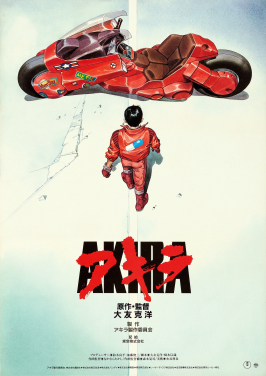
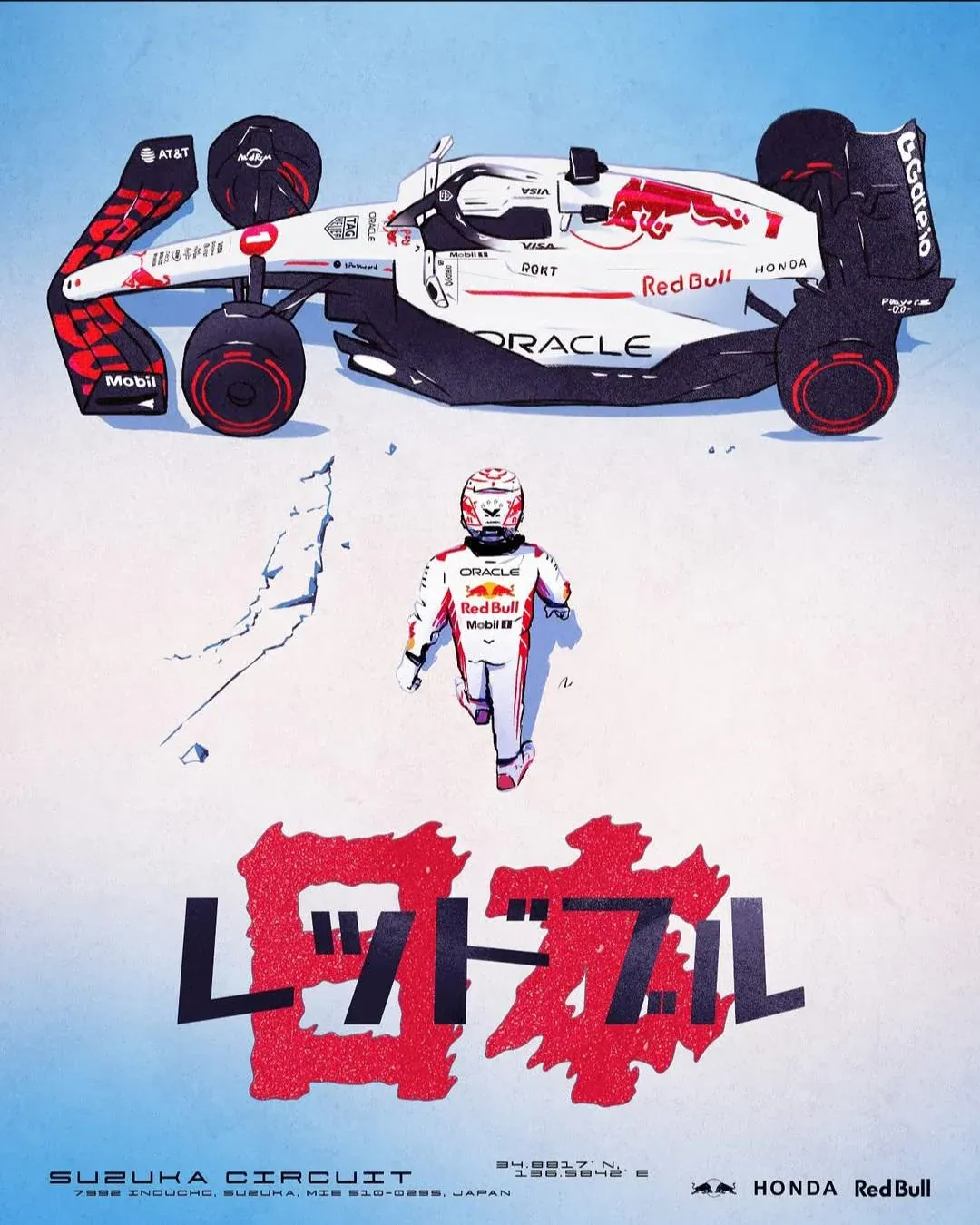
Is F1’s mainstream success a democratization or a dilution? Robinson and Clegg acknowledge the question but decline to answer it, leaving readers to draw their own conclusions about whether this constitutes courage or evasion.
Reading the book might inspire you to notice these cultural crosscurrents, but that’s different from the book analyzing them. The authors are content to document F1’s evolution without evaluating whether the sport has gained more than it’s lost in its pursuit of relevance.
Verdict
The Formula succeeds as an efficient onboarding text. It consolidates F1’s scattered history into a single, readable volume a genuine service for a sport whose literature has been inaccessible to casual fans. But it does so without the analytical rigor or uncomfortable questions that might have made it essential rather than merely useful. For readers who want to understand why F1 is the way it is, this book delivers. For readers who want to understand whether F1 should be this way, it offers little.
Robinson and Clegg have written the F1 book the sport’s new audience needs. Whether longtime fans need it is another question entirely.
 Tsundoku Bazaar
Leave a comment